
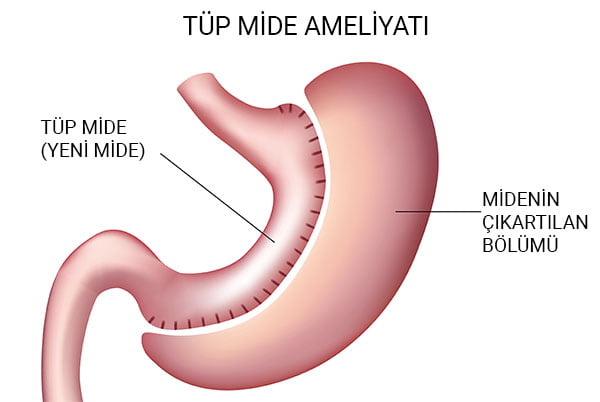
One of the most applied surgical procedures today is sleeve gastrectomy and is commonly known as “stomach reduction surgery”.
In sleeve gastrectomy surgery, the stomach is turned into a long, thin tube like a banana. %80 of the stomach is cut and removed laparoscopically, with the closed surgery method. Thus, the food intake of the stomach is restricted. In addition, sleeve gastrectomy surgery has the effect of reducing food absorption, although at a very low level.
The appetite of those who have gastric sleeve surgery decreases. In addition, insulin resistance is broken without even weight loss. Gastric sleeve surgery is performed in 1.5 hours on average. Since the exit and entrance section of the stomach is preserved and the continuity in the digestive system is maintained, the risks after sleeve gastrectomy are low and some unwanted side effects are reported very little. Gastric sleeve gastrectomy surgery is performed laparoscopically, that is, with very small incisions by piercing the abdomen. These incisions are millimetric, so scarring is minimal.
Those who have gastric sleeve surgery lose %60 of their excess weight 5 years after the operation. This method is almost as effective as gastric bypass for weight loss. Since the absorption disorder is less compared to bypass, continuous vitamin and mineral support is required after sleeve gastrectomy surgery.